
Summarize this text with artificial intelligence
Choose your preferred tool to generate a short summary of the text.
Big data, the most well-known concept, has begun to be mentioned more and more every day. One of the biggest reasons for this is the growth of IT infrastructure and the development of connected technologies.
As an example, cloud structures, meaning new generation online storage technology, can be given. Along with cloud systems, the increase in both storage and information dissemination speed has triggered the spread of big data.
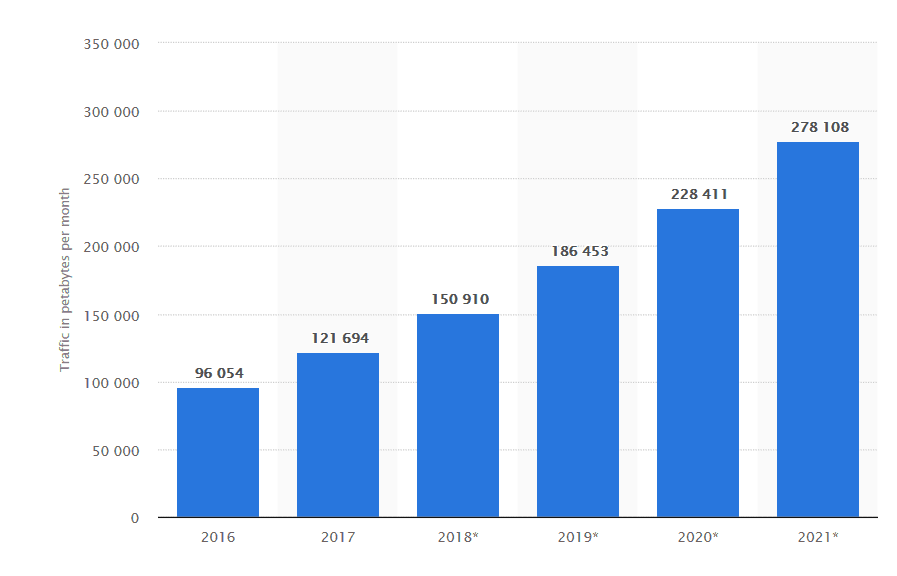
(Global IP data traffic – 2016 to 2021 projection)
Today, with the increase of stored data, making sense of this data has become a science branch. Currently, master's and PhD departments under the title of "Big Data Science and Analysis" have been opened in many universities.
Large companies have already started to make sense of every piece of data produced and plan their roadmaps and plans accordingly. In this way, they shape their futures by making production planning, supplier processes, and many managerial decisions.
Let's look at how big data is transforming the logistics sector; in fact, the data produced in the supply chain is much larger than the data produced in other sectors. Although the percentage share of the logistics sector in GDP is around 12% on average, 25% of the data produced per second worldwide as data is directly or indirectly produced from the logistics sector. At this point, it is possible for a sector that is intertwined with data to make much sense of this.
To give concrete examples of these:
• Sharing data generated by tracking the material inside the container with IOT technology with the buyer and seller: Interpreting potential damage, fatigue, deterioration, etc. situations.
• Analyzing historical traffic data to carry out route and distribution optimization.
• Taking precautions against the Peak season issue: Protecting from excessive and seasonal price increases by supplying necessary equipment and booking in advance.
• Scheduling periodic maintenance of vehicles.
Many fundamental issues like these can be addressed. In fact, if we go into more detail, even data that will directly affect other sectors, such as consecutive tire replacements and tire needs in heavy duty vehicles, can be made sense of within the logistics sector.
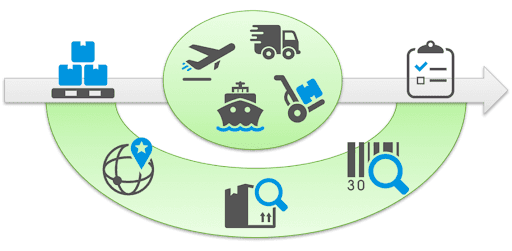
In summary, processing and polishing this mine in the hands of the logistics sector should be one of its biggest targets. As Navlungo, we store every piece of data we obtain and try to make sense of it.
As Navlungo.com, we understand customer demands and expectations by making iterations with this data, and we try to improve service quality day by day.
With my respect and love.
Table of Contents
Emrah Arslan
All Posts


