/

/

What is Incoterms? Which Modes of Transport Does It Cover?

What is Incoterms? Which Modes of Transport Does It Cover?

What is Incoterms? Which Modes of Transport Does It Cover?

/

/

Foreign Trade - Export

Foreign Trade - Export

Foreign Trade - Export

What is Incoterms? Which Modes of Transport Does It Cover?

Summarize this text with artificial intelligence

Choose your preferred tool to generate a short summary of the text.

What is Incoterms?

Incoterms is the abbreviation of "International Commercial Terms", which are the concepts created by the ICC on delivery methods in imports and exports.

Incoterms Delivery Terms were first created by the International Chamber of Commerce (ICC) in 1936. Over time, changes can be observed in the names or contents of delivery terms depending on current conditions. Today, it is referred to as "Incoterms 2020". It binds the trade of importers/exporters to a specific order and rule.

Incoterms 2020 was created for an orderly system in trade. It is a rule to be applied, not a law. Parties can negotiate with each other and determine the terms of trade themselves. However, acting with ICC rules is more advantageous.

It provides a basis for both parties in negative situations within contract processes. In this way, a standard delivery method is determined during trade. Rights are protected within the framework of the rules. It makes it easier to resolve any problems that may arise.

What is the Content of Incoterms 2020?

Incoterms delivery methods are grouped into 4 categories. There are 11 delivery terms in total.

• Group E, stands for Ex group and represents departure. Delivery methods concerning the departure of the goods start with the letter E.

• In Group F delivery terms, the freight is not paid by the exporter, but by the importer. All delivery methods related to this situation start with the letter F.

• Group C delivery terms indicate that the freight is paid by the exporter. All delivery methods related to the topic start with the letter C.

• With Group D terms, the focus is on the destination point of the goods. The relevant delivery methods start with the letter D.
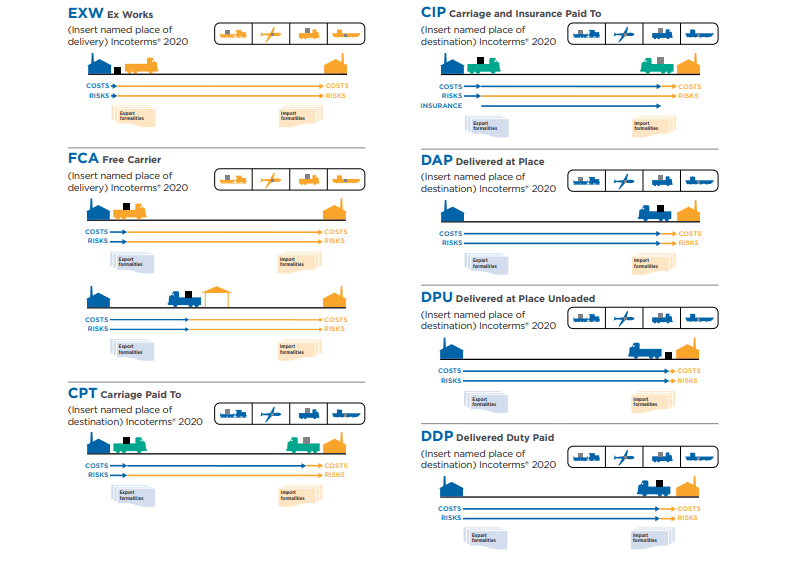
Delivery methods used in all transport modes

EXW (EX WORKS) : Delivery at the exporter's place of business

What is EXW?

It is the delivery method that puts the seller (exporter) to the least trouble. It is sufficient for the seller to prepare the product and leave it at their doorstep (warehouse, factory). The remaining process belongs to the importer. The importer takes the goods from the door and transports them to the shipping company. Dealing with customs procedures is entirely the responsibility of the importer.

FCA (FREE CARRIER): Delivery to carrier

Instead of the exporter delivering the goods from their own door, it takes place by leaving them at a mutually designated point with the carrier company. Alternatively, it is a delivery method that occurs by delivery to the carrier's warehouse. The exporter is primary responsible until the goods reach the hands of the carrier.

CPT (CARRIAGE PAID TO): Carriage paid to delivery

The exporter is responsible for preparing the goods and handling the freight processes. The moment the goods reach the customs of the buyer's country, the responsibility passes to the importer. The importer is obliged to handle customs clearance and unload the goods to their warehouse.

CIP (Carriage and Insurance Paid to): Carriage and Insurance paid to delivery

Its usage is exactly the same as CPT. In addition, the exporter undertakes the insurance coverage if anything happens to the goods during the process until their arrival at customs.

DDP (DELIVERED DUTY PAID): Delivered duty paid

This is the delivery method used as the exact opposite of the EXW delivery method. The exporter is responsible for preparing the goods, handling the shipping, and facilitating customs procedures for both regions. In this case, the importer is only responsible for receiving the goods from customs.

DAP (DELIVERED AT PLACE): Delivered at place

The exporter loads the goods subject to trade and handles the customs clearance in their country. They deliver the goods to the place agreed with the importer (warehouse, terminal, port, importer's warehouse). Subsequently, they leave the unloading to the importer. Customs clearance and any costs that may arise belong to the importer.

DPU (DELIVERED AT PLACE UNLOADED): Delivered at place unloaded

Looking at it, the work done is almost the same as the DDP delivery method. The only difference is that the exporter undertakes the unloading of the goods at the customs of the receiving country. The exporter is personally obliged to unload the goods to the relevant warehouse.

Delivery methods used in maritime and inland waterway transport

FAS (FREE ALONGSIDE SHIP): Free alongside ship

The exporter prepares the goods, brings them to the port, and leaves them alongside the ship. They do not load the goods onto the vessel and they handle the customs procedures. Thus, loading the goods onto the ship, unloading, transportation, and insurance costs belong to the importer.

FOB (FREE ON BOARD): Free on board

Its procedures are the same as the FAS delivery method. The only difference is that the load left alongside the ship in FAS is placed onto the vessel in FOB delivery. The remaining process is repeated as in FAS.

CFR (COST AND FREIGHT): Cost and freight paid delivery

The action we mentioned in the CPT delivery method applies exactly. It is a term and delivery method used only in maritime transport.

The exporter is responsible for preparing the goods and handling the freight processes. The moment the goods reach the customs of the buyer's country, the responsibility passes to the importer. The importer is obliged to handle customs clearance and unload the goods to their warehouse.

CIF (COST, INSURANCE, FREIGHT): Cost, insurance, and freight paid delivery

CFR conditions apply exactly. The only difference is that the exporter arranges marine insurance.

In this article, we have detailed the delivery methods of 2020 for all current and prospective importers/exporters. Keep following the Navlungo Blog for the industry's curious topics and new developments!

    {
        "@context": "https://schema.org",
        "@type": "FAQPage",
        "mainEntity": [{
            "@type": "Question",
            "name": "What is Incoterms?",
            "acceptedAnswer": {
                "@type": "Answer",
                "text": "Incoterms is the abbreviation of \"International Commercial Terms\", which are the concepts created by the ICC on delivery methods in imports and exports."
            }
        }, {
            "@type": "Question",
            "name": "What is the content of Incoterms 2020?",
            "acceptedAnswer": {
                "@type": "Answer",
                "text": "Incoterms delivery methods are grouped into 4 categories. There are 11 delivery terms in total. Group E stands for Ex group and represents departure. Delivery methods concerning the departure of the goods start with the letter E. In Group F delivery terms, the freight is not paid by the exporter, but by the importer. All delivery methods related to this situation start with the letter F. Group C delivery terms indicate that the freight is paid by the exporter. All delivery methods related to the topic start with the letter C. With Group D terms, the focus is on the destination point of the goods. The relevant delivery methods start with the letter D."
            }
        }, {
            "@type": "Question",
            "name": "What are the codes regarding the mode of transport?",
            "acceptedAnswer": {
                "@type": "Answer",
                "text": "EXW (EX WORKS), FCA (FREE CARRIER), CPT (CARRIAGE PAID TO), CIP (CARRIAGE AND INSURANCE PAID TO), DDP (DELIVERED DUTY PAID), DAP (DELIVERED AT PLACE), DPU (DELIVERED AT PLACE UNLOADED), FAS (FREE ALONGSIDE SHIP), FOB (FREE ON BOARD), CFR (COST AND FREIGHT), CIF (COST, INSURANCE, FREIGHT)"
            }
        }, {
            "@type": "Question",
            "name": "What is EXW (EX WORKS)?",
            "acceptedAnswer": {
                "@type": "Answer",
                "text": "It is the delivery method that puts the seller (exporter) to the least trouble. It is sufficient for the seller to prepare the product and leave it at their doorstep (warehouse, factory). The remaining process belongs to the importer. The importer takes the goods from the door and transports them to the shipping company. Dealing with customs procedures is entirely the responsibility of the importer."
            }
        }, {
            "@type": "Question",
            "name": "What is FCA (FREE CARRIER)?",
            "acceptedAnswer": {
                "@type": "Answer",
                "text": "Instead of the exporter delivering the goods from their own door, it takes place by leaving them at a mutually designated point with the carrier company. Alternatively, it is a delivery method that occurs by delivery to the carrier's warehouse. The exporter is primary responsible until the goods reach the hands of the carrier."
            }
        }, {
            "@type": "Question",
            "name": "What is CPT (CARRIAGE PAID TO)?",
            "acceptedAnswer": {
                "@type": "Answer",
                "text": "The exporter is responsible for preparing the goods and handling the freight processes. The moment the goods reach the customs of the buyer's country, the responsibility passes to the importer. The importer is obliged to handle customs clearance and unload the goods to their warehouse."
            }
        }, {
            "@type": "Question",
            "name": "What is CIP (Carriage and Insurance Paid to)?",
            "acceptedAnswer": {
                "@type": "Answer",
                "text": "Its usage is exactly the same as CPT. In addition, the exporter undertakes the insurance coverage if anything happens to the goods during the process until their arrival at customs."
            }
        }, {
            "@type": "Question",
            "name": "What is DDP (DELIVERED DUTY PAID)?",
            "acceptedAnswer": {
                "@type": "Answer",
                "text": "This is the delivery method used as the exact opposite of the EXW delivery method. The exporter is responsible for preparing the goods, handling the shipping, and facilitating customs procedures for both regions. In this case, the importer is only responsible for receiving the goods from customs."
            }
        }, {
            "@type": "Question",
            "name": "What is DAP (DELIVERED AT PLACE)?",
            "acceptedAnswer": {
                "@type": "Answer",
                "text": "The exporter loads the goods subject to trade and handles the customs clearance in their country. They deliver the goods to the place agreed with the importer (warehouse, terminal, port, importer's warehouse). Subsequently, they leave the unloading to the importer. Customs clearance and any costs that may arise belong to the importer."
            }
        }, {
            "@type": "Question",
            "name": "What is DPU (DELIVERED AT PLACE UNLOADED)?",
            "acceptedAnswer": {
                "@type": "Answer",
                "text": "Looking at it, the work done is almost the same as the DDP delivery method. The only difference is that the exporter undertakes the unloading of the goods at the customs of the receiving country. The exporter is personally obliged to unload the goods to the relevant warehouse."
            }
        }, {
            "@type": "Question",
            "name": "What are the delivery terms used in maritime and inland waterway transport?",
            "acceptedAnswer": {
                "@type": "Answer",
                "text": "FAS (FREE ALONGSIDE SHIP), FOB (FREE ON BOARD), CFR (COST AND FREIGHT), CIF (COST, INSURANCE, FREIGHT)"
            }
        }, {
            "@type": "Question",
            "name": "What is FAS (FREE ALONGSIDE SHIP)?",
            "acceptedAnswer": {
                "@type": "Answer",
                "text": "The exporter prepares the goods, brings them to the port, and leaves them alongside the ship. They do not load the goods onto the vessel and they handle the customs procedures. Thus, loading the goods onto the ship, unloading, transportation, and insurance costs belong to the importer."
            }
        }, {
            "@type": "Question",
            "name": "What is FOB (FREE ON BOARD)?",
            "acceptedAnswer": {
                "@type": "Answer",
                "text": "Its procedures are the same as the FAS delivery method. The only difference is that the load left alongside the ship in FAS is placed onto the vessel in FOB delivery. The remaining process is repeated as in FAS."
            }
        }, {
            "@type": "Question",
            "name": "What is CFR (COST AND FREIGHT)?",
            "acceptedAnswer": {
                "@type": "Answer",
                "text": "The action we mentioned in the CPT delivery method applies exactly. It is a term and delivery method used only in maritime transport. The exporter is responsible for preparing the goods and handling the freight processes. The moment the goods reach the customs of the buyer's country, the responsibility passes to the importer. The importer is obliged to handle customs clearance and unload the goods to their warehouse."
            }
        }, {
            "@type": "Question",
            "name": "What is CIF (COST, INSURANCE, FREIGHT)?",
            "acceptedAnswer": {
                "@type": "Answer",
                "text": "CFR conditions apply exactly. The only difference is that the exporter arranges marine insurance."
            }
        }, {
            "@type": "Question",
            "name": "Which transport modes do Incoterms cover?",
            "acceptedAnswer": {
                "@type": "Answer",
                "text": "EXW (EX WORKS), FCA (FREE CARRIER), CPT (CARRIAGE PAID TO), CIP (CARRIAGE AND INSURANCE PAID TO), DDP (DELIVERED DUTY PAID), DAP (DELIVERED AT PLACE), DPU (DELIVERED AT PLACE UNLOADED), FAS (FREE ALONGSIDE SHIP), FOB (FREE ON BOARD), CFR (COST AND FREIGHT), CIF (COST, INSURANCE, FREIGHT)"
            }
        }]
    }
    {
        "@context": "https://schema.org",
        "@type": "FAQPage",
        "mainEntity": [{
            "@type": "Question",
            "name": "What is Incoterms?",
            "acceptedAnswer": {
                "@type": "Answer",
                "text": "Incoterms is the abbreviation of \"International Commercial Terms\", which are the concepts created by the ICC on delivery methods in imports and exports."
            }
        }, {
            "@type": "Question",
            "name": "What is the content of Incoterms 2020?",
            "acceptedAnswer": {
                "@type": "Answer",
                "text": "Incoterms delivery methods are grouped into 4 categories. There are 11 delivery terms in total. Group E stands for Ex group and represents departure. Delivery methods concerning the departure of the goods start with the letter E. In Group F delivery terms, the freight is not paid by the exporter, but by the importer. All delivery methods related to this situation start with the letter F. Group C delivery terms indicate that the freight is paid by the exporter. All delivery methods related to the topic start with the letter C. With Group D terms, the focus is on the destination point of the goods. The relevant delivery methods start with the letter D."
            }
        }, {
            "@type": "Question",
            "name": "What are the codes regarding the mode of transport?",
            "acceptedAnswer": {
                "@type": "Answer",
                "text": "EXW (EX WORKS), FCA (FREE CARRIER), CPT (CARRIAGE PAID TO), CIP (CARRIAGE AND INSURANCE PAID TO), DDP (DELIVERED DUTY PAID), DAP (DELIVERED AT PLACE), DPU (DELIVERED AT PLACE UNLOADED), FAS (FREE ALONGSIDE SHIP), FOB (FREE ON BOARD), CFR (COST AND FREIGHT), CIF (COST, INSURANCE, FREIGHT)"
            }
        }, {
            "@type": "Question",
            "name": "What is EXW (EX WORKS)?",
            "acceptedAnswer": {
                "@type": "Answer",
                "text": "It is the delivery method that puts the seller (exporter) to the least trouble. It is sufficient for the seller to prepare the product and leave it at their doorstep (warehouse, factory). The remaining process belongs to the importer. The importer takes the goods from the door and transports them to the shipping company. Dealing with customs procedures is entirely the responsibility of the importer."
            }
        }, {
            "@type": "Question",
            "name": "What is FCA (FREE CARRIER)?",
            "acceptedAnswer": {
                "@type": "Answer",
                "text": "Instead of the exporter delivering the goods from their own door, it takes place by leaving them at a mutually designated point with the carrier company. Alternatively, it is a delivery method that occurs by delivery to the carrier's warehouse. The exporter is primary responsible until the goods reach the hands of the carrier."
            }
        }, {
            "@type": "Question",
            "name": "What is CPT (CARRIAGE PAID TO)?",
            "acceptedAnswer": {
                "@type": "Answer",
                "text": "The exporter is responsible for preparing the goods and handling the freight processes. The moment the goods reach the customs of the buyer's country, the responsibility passes to the importer. The importer is obliged to handle customs clearance and unload the goods to their warehouse."
            }
        }, {
            "@type": "Question",
            "name": "What is CIP (Carriage and Insurance Paid to)?",
            "acceptedAnswer": {
                "@type": "Answer",
                "text": "Its usage is exactly the same as CPT. In addition, the exporter undertakes the insurance coverage if anything happens to the goods during the process until their arrival at customs."
            }
        }, {
            "@type": "Question",
            "name": "What is DDP (DELIVERED DUTY PAID)?",
            "acceptedAnswer": {
                "@type": "Answer",
                "text": "This is the delivery method used as the exact opposite of the EXW delivery method. The exporter is responsible for preparing the goods, handling the shipping, and facilitating customs procedures for both regions. In this case, the importer is only responsible for receiving the goods from customs."
            }
        }, {
            "@type": "Question",
            "name": "What is DAP (DELIVERED AT PLACE)?",
            "acceptedAnswer": {
                "@type": "Answer",
                "text": "The exporter loads the goods subject to trade and handles the customs clearance in their country. They deliver the goods to the place agreed with the importer (warehouse, terminal, port, importer's warehouse). Subsequently, they leave the unloading to the importer. Customs clearance and any costs that may arise belong to the importer."
            }
        }, {
            "@type": "Question",
            "name": "What is DPU (DELIVERED AT PLACE UNLOADED)?",
            "acceptedAnswer": {
                "@type": "Answer",
                "text": "Looking at it, the work done is almost the same as the DDP delivery method. The only difference is that the exporter undertakes the unloading of the goods at the customs of the receiving country. The exporter is personally obliged to unload the goods to the relevant warehouse."
            }
        }, {
            "@type": "Question",
            "name": "What are the delivery terms used in maritime and inland waterway transport?",
            "acceptedAnswer": {
                "@type": "Answer",
                "text": "FAS (FREE ALONGSIDE SHIP), FOB (FREE ON BOARD), CFR (COST AND FREIGHT), CIF (COST, INSURANCE, FREIGHT)"
            }
        }, {
            "@type": "Question",
            "name": "What is FAS (FREE ALONGSIDE SHIP)?",
            "acceptedAnswer": {
                "@type": "Answer",
                "text": "The exporter prepares the goods, brings them to the port, and leaves them alongside the ship. They do not load the goods onto the vessel and they handle the customs procedures. Thus, loading the goods onto the ship, unloading, transportation, and insurance costs belong to the importer."
            }
        }, {
            "@type": "Question",
            "name": "What is FOB (FREE ON BOARD)?",
            "acceptedAnswer": {
                "@type": "Answer",
                "text": "Its procedures are the same as the FAS delivery method. The only difference is that the load left alongside the ship in FAS is placed onto the vessel in FOB delivery. The remaining process is repeated as in FAS."
            }
        }, {
            "@type": "Question",
            "name": "What is CFR (COST AND FREIGHT)?",
            "acceptedAnswer": {
                "@type": "Answer",
                "text": "The action we mentioned in the CPT delivery method applies exactly. It is a term and delivery method used only in maritime transport. The exporter is responsible for preparing the goods and handling the freight processes. The moment the goods reach the customs of the buyer's country, the responsibility passes to the importer. The importer is obliged to handle customs clearance and unload the goods to their warehouse."
            }
        }, {
            "@type": "Question",
            "name": "What is CIF (COST, INSURANCE, FREIGHT)?",
            "acceptedAnswer": {
                "@type": "Answer",
                "text": "CFR conditions apply exactly. The only difference is that the exporter arranges marine insurance."
            }
        }, {
            "@type": "Question",
            "name": "Which transport modes do Incoterms cover?",
            "acceptedAnswer": {
                "@type": "Answer",
                "text": "EXW (EX WORKS), FCA (FREE CARRIER), CPT (CARRIAGE PAID TO), CIP (CARRIAGE AND INSURANCE PAID TO), DDP (DELIVERED DUTY PAID), DAP (DELIVERED AT PLACE), DPU (DELIVERED AT PLACE UNLOADED), FAS (FREE ALONGSIDE SHIP), FOB (FREE ON BOARD), CFR (COST AND FREIGHT), CIF (COST, INSURANCE, FREIGHT)"
            }
        }]
    }
    {
        "@context": "https://schema.org",
        "@type": "FAQPage",
        "mainEntity": [{
            "@type": "Question",
            "name": "What is Incoterms?",
            "acceptedAnswer": {
                "@type": "Answer",
                "text": "Incoterms is the abbreviation of \"International Commercial Terms\", which are the concepts created by the ICC on delivery methods in imports and exports."
            }
        }, {
            "@type": "Question",
            "name": "What is the content of Incoterms 2020?",
            "acceptedAnswer": {
                "@type": "Answer",
                "text": "Incoterms delivery methods are grouped into 4 categories. There are 11 delivery terms in total. Group E stands for Ex group and represents departure. Delivery methods concerning the departure of the goods start with the letter E. In Group F delivery terms, the freight is not paid by the exporter, but by the importer. All delivery methods related to this situation start with the letter F. Group C delivery terms indicate that the freight is paid by the exporter. All delivery methods related to the topic start with the letter C. With Group D terms, the focus is on the destination point of the goods. The relevant delivery methods start with the letter D."
            }
        }, {
            "@type": "Question",
            "name": "What are the codes regarding the mode of transport?",
            "acceptedAnswer": {
                "@type": "Answer",
                "text": "EXW (EX WORKS), FCA (FREE CARRIER), CPT (CARRIAGE PAID TO), CIP (CARRIAGE AND INSURANCE PAID TO), DDP (DELIVERED DUTY PAID), DAP (DELIVERED AT PLACE), DPU (DELIVERED AT PLACE UNLOADED), FAS (FREE ALONGSIDE SHIP), FOB (FREE ON BOARD), CFR (COST AND FREIGHT), CIF (COST, INSURANCE, FREIGHT)"
            }
        }, {
            "@type": "Question",
            "name": "What is EXW (EX WORKS)?",
            "acceptedAnswer": {
                "@type": "Answer",
                "text": "It is the delivery method that puts the seller (exporter) to the least trouble. It is sufficient for the seller to prepare the product and leave it at their doorstep (warehouse, factory). The remaining process belongs to the importer. The importer takes the goods from the door and transports them to the shipping company. Dealing with customs procedures is entirely the responsibility of the importer."
            }
        }, {
            "@type": "Question",
            "name": "What is FCA (FREE CARRIER)?",
            "acceptedAnswer": {
                "@type": "Answer",
                "text": "Instead of the exporter delivering the goods from their own door, it takes place by leaving them at a mutually designated point with the carrier company. Alternatively, it is a delivery method that occurs by delivery to the carrier's warehouse. The exporter is primary responsible until the goods reach the hands of the carrier."
            }
        }, {
            "@type": "Question",
            "name": "What is CPT (CARRIAGE PAID TO)?",
            "acceptedAnswer": {
                "@type": "Answer",
                "text": "The exporter is responsible for preparing the goods and handling the freight processes. The moment the goods reach the customs of the buyer's country, the responsibility passes to the importer. The importer is obliged to handle customs clearance and unload the goods to their warehouse."
            }
        }, {
            "@type": "Question",
            "name": "What is CIP (Carriage and Insurance Paid to)?",
            "acceptedAnswer": {
                "@type": "Answer",
                "text": "Its usage is exactly the same as CPT. In addition, the exporter undertakes the insurance coverage if anything happens to the goods during the process until their arrival at customs."
            }
        }, {
            "@type": "Question",
            "name": "What is DDP (DELIVERED DUTY PAID)?",
            "acceptedAnswer": {
                "@type": "Answer",
                "text": "This is the delivery method used as the exact opposite of the EXW delivery method. The exporter is responsible for preparing the goods, handling the shipping, and facilitating customs procedures for both regions. In this case, the importer is only responsible for receiving the goods from customs."
            }
        }, {
            "@type": "Question",
            "name": "What is DAP (DELIVERED AT PLACE)?",
            "acceptedAnswer": {
                "@type": "Answer",
                "text": "The exporter loads the goods subject to trade and handles the customs clearance in their country. They deliver the goods to the place agreed with the importer (warehouse, terminal, port, importer's warehouse). Subsequently, they leave the unloading to the importer. Customs clearance and any costs that may arise belong to the importer."
            }
        }, {
            "@type": "Question",
            "name": "What is DPU (DELIVERED AT PLACE UNLOADED)?",
            "acceptedAnswer": {
                "@type": "Answer",
                "text": "Looking at it, the work done is almost the same as the DDP delivery method. The only difference is that the exporter undertakes the unloading of the goods at the customs of the receiving country. The exporter is personally obliged to unload the goods to the relevant warehouse."
            }
        }, {
            "@type": "Question",
            "name": "What are the delivery terms used in maritime and inland waterway transport?",
            "acceptedAnswer": {
                "@type": "Answer",
                "text": "FAS (FREE ALONGSIDE SHIP), FOB (FREE ON BOARD), CFR (COST AND FREIGHT), CIF (COST, INSURANCE, FREIGHT)"
            }
        }, {
            "@type": "Question",
            "name": "What is FAS (FREE ALONGSIDE SHIP)?",
            "acceptedAnswer": {
                "@type": "Answer",
                "text": "The exporter prepares the goods, brings them to the port, and leaves them alongside the ship. They do not load the goods onto the vessel and they handle the customs procedures. Thus, loading the goods onto the ship, unloading, transportation, and insurance costs belong to the importer."
            }
        }, {
            "@type": "Question",
            "name": "What is FOB (FREE ON BOARD)?",
            "acceptedAnswer": {
                "@type": "Answer",
                "text": "Its procedures are the same as the FAS delivery method. The only difference is that the load left alongside the ship in FAS is placed onto the vessel in FOB delivery. The remaining process is repeated as in FAS."
            }
        }, {
            "@type": "Question",
            "name": "What is CFR (COST AND FREIGHT)?",
            "acceptedAnswer": {
                "@type": "Answer",
                "text": "The action we mentioned in the CPT delivery method applies exactly. It is a term and delivery method used only in maritime transport. The exporter is responsible for preparing the goods and handling the freight processes. The moment the goods reach the customs of the buyer's country, the responsibility passes to the importer. The importer is obliged to handle customs clearance and unload the goods to their warehouse."
            }
        }, {
            "@type": "Question",
            "name": "What is CIF (COST, INSURANCE, FREIGHT)?",
            "acceptedAnswer": {
                "@type": "Answer",
                "text": "CFR conditions apply exactly. The only difference is that the exporter arranges marine insurance."
            }
        }, {
            "@type": "Question",
            "name": "Which transport modes do Incoterms cover?",
            "acceptedAnswer": {
                "@type": "Answer",
                "text": "EXW (EX WORKS), FCA (FREE CARRIER), CPT (CARRIAGE PAID TO), CIP (CARRIAGE AND INSURANCE PAID TO), DDP (DELIVERED DUTY PAID), DAP (DELIVERED AT PLACE), DPU (DELIVERED AT PLACE UNLOADED), FAS (FREE ALONGSIDE SHIP), FOB (FREE ON BOARD), CFR (COST AND FREIGHT), CIF (COST, INSURANCE, FREIGHT)"
            }
        }]
    }
    {
        "@context": "https://schema.org",
        "@type": "FAQPage",
        "mainEntity": [{
            "@type": "Question",
            "name": "What is Incoterms?",
            "acceptedAnswer": {
                "@type": "Answer",
                "text": "Incoterms is the abbreviation of \"International Commercial Terms\", which are the concepts created by the ICC on delivery methods in imports and exports."
            }
        }, {
            "@type": "Question",
            "name": "What is the content of Incoterms 2020?",
            "acceptedAnswer": {
                "@type": "Answer",
                "text": "Incoterms delivery methods are grouped into 4 categories. There are 11 delivery terms in total. Group E stands for Ex group and represents departure. Delivery methods concerning the departure of the goods start with the letter E. In Group F delivery terms, the freight is not paid by the exporter, but by the importer. All delivery methods related to this situation start with the letter F. Group C delivery terms indicate that the freight is paid by the exporter. All delivery methods related to the topic start with the letter C. With Group D terms, the focus is on the destination point of the goods. The relevant delivery methods start with the letter D."
            }
        }, {
            "@type": "Question",
            "name": "What are the codes regarding the mode of transport?",
            "acceptedAnswer": {
                "@type": "Answer",
                "text": "EXW (EX WORKS), FCA (FREE CARRIER), CPT (CARRIAGE PAID TO), CIP (CARRIAGE AND INSURANCE PAID TO), DDP (DELIVERED DUTY PAID), DAP (DELIVERED AT PLACE), DPU (DELIVERED AT PLACE UNLOADED), FAS (FREE ALONGSIDE SHIP), FOB (FREE ON BOARD), CFR (COST AND FREIGHT), CIF (COST, INSURANCE, FREIGHT)"
            }
        }, {
            "@type": "Question",
            "name": "What is EXW (EX WORKS)?",
            "acceptedAnswer": {
                "@type": "Answer",
                "text": "It is the delivery method that puts the seller (exporter) to the least trouble. It is sufficient for the seller to prepare the product and leave it at their doorstep (warehouse, factory). The remaining process belongs to the importer. The importer takes the goods from the door and transports them to the shipping company. Dealing with customs procedures is entirely the responsibility of the importer."
            }
        }, {
            "@type": "Question",
            "name": "What is FCA (FREE CARRIER)?",
            "acceptedAnswer": {
                "@type": "Answer",
                "text": "Instead of the exporter delivering the goods from their own door, it takes place by leaving them at a mutually designated point with the carrier company. Alternatively, it is a delivery method that occurs by delivery to the carrier's warehouse. The exporter is primary responsible until the goods reach the hands of the carrier."
            }
        }, {
            "@type": "Question",
            "name": "What is CPT (CARRIAGE PAID TO)?",
            "acceptedAnswer": {
                "@type": "Answer",
                "text": "The exporter is responsible for preparing the goods and handling the freight processes. The moment the goods reach the customs of the buyer's country, the responsibility passes to the importer. The importer is obliged to handle customs clearance and unload the goods to their warehouse."
            }
        }, {
            "@type": "Question",
            "name": "What is CIP (Carriage and Insurance Paid to)?",
            "acceptedAnswer": {
                "@type": "Answer",
                "text": "Its usage is exactly the same as CPT. In addition, the exporter undertakes the insurance coverage if anything happens to the goods during the process until their arrival at customs."
            }
        }, {
            "@type": "Question",
            "name": "What is DDP (DELIVERED DUTY PAID)?",
            "acceptedAnswer": {
                "@type": "Answer",
                "text": "This is the delivery method used as the exact opposite of the EXW delivery method. The exporter is responsible for preparing the goods, handling the shipping, and facilitating customs procedures for both regions. In this case, the importer is only responsible for receiving the goods from customs."
            }
        }, {
            "@type": "Question",
            "name": "What is DAP (DELIVERED AT PLACE)?",
            "acceptedAnswer": {
                "@type": "Answer",
                "text": "The exporter loads the goods subject to trade and handles the customs clearance in their country. They deliver the goods to the place agreed with the importer (warehouse, terminal, port, importer's warehouse). Subsequently, they leave the unloading to the importer. Customs clearance and any costs that may arise belong to the importer."
            }
        }, {
            "@type": "Question",
            "name": "What is DPU (DELIVERED AT PLACE UNLOADED)?",
            "acceptedAnswer": {
                "@type": "Answer",
                "text": "Looking at it, the work done is almost the same as the DDP delivery method. The only difference is that the exporter undertakes the unloading of the goods at the customs of the receiving country. The exporter is personally obliged to unload the goods to the relevant warehouse."
            }
        }, {
            "@type": "Question",
            "name": "What are the delivery terms used in maritime and inland waterway transport?",
            "acceptedAnswer": {
                "@type": "Answer",
                "text": "FAS (FREE ALONGSIDE SHIP), FOB (FREE ON BOARD), CFR (COST AND FREIGHT), CIF (COST, INSURANCE, FREIGHT)"
            }
        }, {
            "@type": "Question",
            "name": "What is FAS (FREE ALONGSIDE SHIP)?",
            "acceptedAnswer": {
                "@type": "Answer",
                "text": "The exporter prepares the goods, brings them to the port, and leaves them alongside the ship. They do not load the goods onto the vessel and they handle the customs procedures. Thus, loading the goods onto the ship, unloading, transportation, and insurance costs belong to the importer."
            }
        }, {
            "@type": "Question",
            "name": "What is FOB (FREE ON BOARD)?",
            "acceptedAnswer": {
                "@type": "Answer",
                "text": "Its procedures are the same as the FAS delivery method. The only difference is that the load left alongside the ship in FAS is placed onto the vessel in FOB delivery. The remaining process is repeated as in FAS."
            }
        }, {
            "@type": "Question",
            "name": "What is CFR (COST AND FREIGHT)?",
            "acceptedAnswer": {
                "@type": "Answer",
                "text": "The action we mentioned in the CPT delivery method applies exactly. It is a term and delivery method used only in maritime transport. The exporter is responsible for preparing the goods and handling the freight processes. The moment the goods reach the customs of the buyer's country, the responsibility passes to the importer. The importer is obliged to handle customs clearance and unload the goods to their warehouse."
            }
        }, {
            "@type": "Question",
            "name": "What is CIF (COST, INSURANCE, FREIGHT)?",
            "acceptedAnswer": {
                "@type": "Answer",
                "text": "CFR conditions apply exactly. The only difference is that the exporter arranges marine insurance."
            }
        }, {
            "@type": "Question",
            "name": "Which transport modes do Incoterms cover?",
            "acceptedAnswer": {
                "@type": "Answer",
                "text": "EXW (EX WORKS), FCA (FREE CARRIER), CPT (CARRIAGE PAID TO), CIP (CARRIAGE AND INSURANCE PAID TO), DDP (DELIVERED DUTY PAID), DAP (DELIVERED AT PLACE), DPU (DELIVERED AT PLACE UNLOADED), FAS (FREE ALONGSIDE SHIP), FOB (FREE ON BOARD), CFR (COST AND FREIGHT), CIF (COST, INSURANCE, FREIGHT)"
            }
        }]
    }
Table of Contents
No headings found on page

Senem Savcu

All Posts

/

What is Incoterms? Which Modes of Transport Does It Cover?