Summarize this text with artificial intelligence
Choose your preferred tool to generate a short summary of the text.
Logistics is a highly comprehensive process with many different operations. Since it is needed in every field where there is transportation and trade, regardless of the sector, it has developed over time along with needs and expanded its scope.
So, what is logistics, what does it do, and what functions does it have? We have prepared the most comprehensive answers to your questions for you, along with all the processes that fall under the scope of logistics. Keep scrolling down to clear your questions!
What is Logistics?
Logistics plans and executes processes such as transportation and storage from the departure of goods to their delivery. The goal of logistics is to meet customers' requirements on time and at affordable costs.
Logistics was initially of vital importance for the transportation of military personnel, equipment, and goods. Along with the developing world and trade routes, today it has acquired a much more comprehensive meaning for transporting commercial goods within the supply chain.
These developments led to the birth of logistics companies. Logistics companies, which have gained expertise over time, serve manufacturers, retailers, and other sectors that rely heavily on moving goods. While some have the entire infrastructure from jet planes to trucks, warehouses, and software, there are also companies that serve in only a few areas.
We can list the most important takeaways about logistics as follows:
• Logistics refers to the movement and storage of products in and out of a company.
• Logistics management focuses on providing the right amount of resources at the right time.
• Poor logistics in a business can affect its profitability.
What Does Logistics Do?
Logisticians are responsible for smoothly running operations at simple or complex levels. Although these responsibilities vary depending on the customer's demand and the company's capabilities, in general, logisticians are obliged to safely carry out all processes until the customer's goods reach the delivery point.
So, what are these processes and what do they entail? Now, let's take a look at all the activities included in logistics services.
What are Logistics Activities?
Logistics activities may include all or part of the items listed below. At this point, the differences between logistics companies emerge. While comprehensive service handles all processes, there are also companies that provide subject-based services. Logistics activities include:
• Inbound transportation
• Outbound transportation
• Warehousing
• Fleet management
• Order fulfillment
• Inventory management
• Material handling
• Demand planning
So, what do these activities mean? What kind of service do you get when you purchase any of them?
Inbound Transportation
Inbound transportation is the movement of goods and materials from a supplier to a company. It includes activities such as shipping, storing, and distributing parts or raw materials used in manufacturing. In some cases, it also covers inventory tracking, material sourcing, and the retrieval and delivery of goods from the supplier.
Outbound Transportation
Outbound transportation is the flow of finished products from a company to its customers or end-users. These activities include customer service and distribution channels. For example, when an order is received from a customer, the product's stock availability is checked from inventory, and then the order is sent to the warehouse for packaging and delivery to the customer.
Warehousing
Warehousing means storing goods, inventory, or information securely within an area or building. It is necessary for any kind of business with goods, regardless of size.
The most important concept in warehousing is classification. In this way, when there is a transfer or an order, it can be easily found and made ready for shipment. Additionally, companies can create more accurate strategies by seeing the goods they have and their duration.
Fleet Management
Fleet management refers to the administration of commercial and private vehicles, aviation machinery, ships, and railcars. It can include various functions such as vehicle financing and leasing, licensing and compliance, vehicle maintenance, accident management, and supply chain management.
Efficient fleet management allows companies relying on transportation in their business to minimize or eliminate the risks associated with vehicle investment. This increases efficiency and productivity while reducing overall personnel and transportation costs.
Order Fulfillment
Order fulfillment is the process of storing goods, packaging orders, and delivering products to customers. In a broad sense, order fulfillment includes the activities that take place from the moment a customer places an order until they receive it. Companies can perform order fulfillment in-house or purchase external services for this process.
Inventory Management
Inventory refers to the goods or materials a business plans to sell to customers for profit. As a critical component of the supply chain, inventory management tracks processes from a company's manufacturing facility to the warehouse and from there to the point of sale.
The primary goal of inventory management is to have the right goods or materials. This involves managing this process, including determining when to order, how much to order, and where to store items.
Material Handling
Material handling is the movement of goods or materials within a warehouse or storage area. It includes the use of manual, semi-automatic, and automated systems and equipment. It is important to consider the storage, protection, and control of goods throughout the production, warehousing, and distribution phases.
Demand Planning
Demand planning is the process of forecasting demand to ensure that products can be delivered quickly and reliably. Effective demand planning can improve the accuracy of a company's revenue forecasts, increase profitability for a specific product or channel, and align inventory with demand.
Demand planners carefully analyze internal and external factors that could affect demand, such as news, weather patterns, natural disasters, and labor issues. Gathering information from all possible sources is an effective way to have an accurate forecast of customer demand.
Why is Logistics Important?
Although many small businesses focus on the design and production of their products and services to best meet customer needs, the business will fail if these products cannot reach customers. This is the main role logistics plays. However, logistics also affects other aspects of the business.
The more efficiently raw materials can be purchased, transported, and stored until used, the more profitable the business can be. Coordinating resources to ensure materials are delivered and used on time can make or break a company.
On the customer side, if products cannot be produced and shipped on time, customer satisfaction can drop, which can negatively affect the company's profitability and long-term sustainability.
That is why logistics continues to gain value day by day. As trade in the world becomes globalized and sales channels expand, the scope and value of logistics will continue to grow.
What Are the Functions of Logistics?
Transportation and warehousing are the two main functions of logistics.
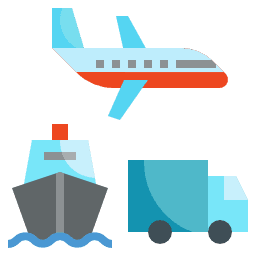
Transportation management focuses on planning, optimizing, and executing the use of vehicles to move goods between warehouses, retail locations, and customers. Transportation is multimodal. It can include sea, air, land, and rail.
Warehousing, on the other hand, includes managing warehouse infrastructure and processes, as well as functions such as inventory management and order fulfillment. In addition, customs management or global trade management is also generally considered part of logistics.
This is because paperwork demonstrating compliance with government regulations must often be processed where goods cross national borders or enter shipping ports.
What is the Difference Between Logistics and Supply Chain Management?
Logistics and supply chain management are terms that are often used interchangeably, but they actually involve two different aspects of the process.
Logistics refers to many different processes including, for example, the purchasing and delivery of raw materials, packaging, shipment, and transportation of goods to distributors.
Supply chain management, on the other hand, refers to a broader external network of organizations working together to deliver products to customers, including vendors, transportation providers, call centers, warehouse providers, and others.
Manage Your Logistics Processes with Navlungo
Navlungo is a logistics technology company that will simplify the logistics processes of all businesses, big or small. It minimizes your logistics costs by offering comprehensive services such as shipping-receiving, warehousing, and marketplace integrations at the most affordable prices. Visit Navlungo now to learn the details!
Frequently Asked Questions About Logistics
What Does Logistics Involve?
Logistics covers all activities in the transportation process of inbound and outbound goods. These activities also include highly important operations such as warehousing, order fulfillment, procurement management, and fleet management.
What Do Logistics Companies Transport?
Logistics companies can transport any type of product that is legal, except for products on state prohibited lists.
What is the Primary Goal of Logistics?
The primary goal of logistics is to deliver goods to their destination smoothly and safely, and to store them during the process.
Table of Contents
Furkan Aktas
All Posts