Summarize this text with artificial intelligence
Choose your preferred tool to generate a short summary of the text.
In this blog post, we will examine the factors you need to pay attention to in maritime transport in logistics, and the preparations you need to make before maritime export.
Due to its many advantages and being an economical transport mode, maritime transport is among the most preferred transport modes by exporters. Since maritime transport makes it possible to transport large and diverse loads in high volumes economically to different routes, approximately 80% of international trade today is carried out by sea. In parallel with the heavy preference for maritime transport, the volume of cargo handled at Turkish ports in the first half of 2022 increased by 6.6%.
In this content, we will share the points you need to consider to manage your exports by sea more profitably and without losing time, as well as the steps you should apply to overcome current crises and difficulties.
What are the Preparations to be Made Before Exporting by Sea?
The market suitable for the product to be exported must be identified.
With market research, the competitive environment, trade channels, legislation, commercial obligations and barriers of the markets planned to be entered should be examined. As a result of the evaluation, the most suitable market for the product is determined and export obligations are fulfilled.
The exporter should evaluate their potential in outward sales and internal capability.
In order to get full efficiency from export, the exporter must evaluate their capacity in outward sales and offer products suitable for their chosen market.
If necessary, professional support should be obtained in foreign trade and legal regulations.
It is necessary to review products that are subject to authorization or banned from export, and to obtain the required license documents. If needed, support from foreign trade specialists can be obtained for such marketing and legislation issues.
A written proposal should be prepared and sent to the buyer.
A written proposal should be prepared and presented to the importer company along with the sample. If negotiations on export conditions are achieved and mutual expectations align, the foreign trade contract must be prepared and signed. The contract should include the following elements:
• Payment Method
• Place and time of delivery
• Product price and quantity
• Issuing Bank
• Company title
• Contact information
• Terms of agreement
What are the Things to Consider in Actual Export?
After completing the necessary preparations, choosing the maritime logistics company that will carry out the export emerges as the most important issue. Since they consider costs, the primary goal of exporters is to find a reasonable freight rate. Along with this, when selecting a logistics company, attention should be paid to issues such as its operational quality, transit time and quality of the service used, equipment guarantee, speed, and accessibility. Taking all these components into consideration, the most ideal one among maritime logistics companies should be selected.
When receiving offers from companies carrying out maritime transport, the following elements must be considered:
• Demurrage free time
• Cost items included and excluded in the offer
• Transit time
• Transshipment port details
• Validity date
Choose the Right Type of Transport
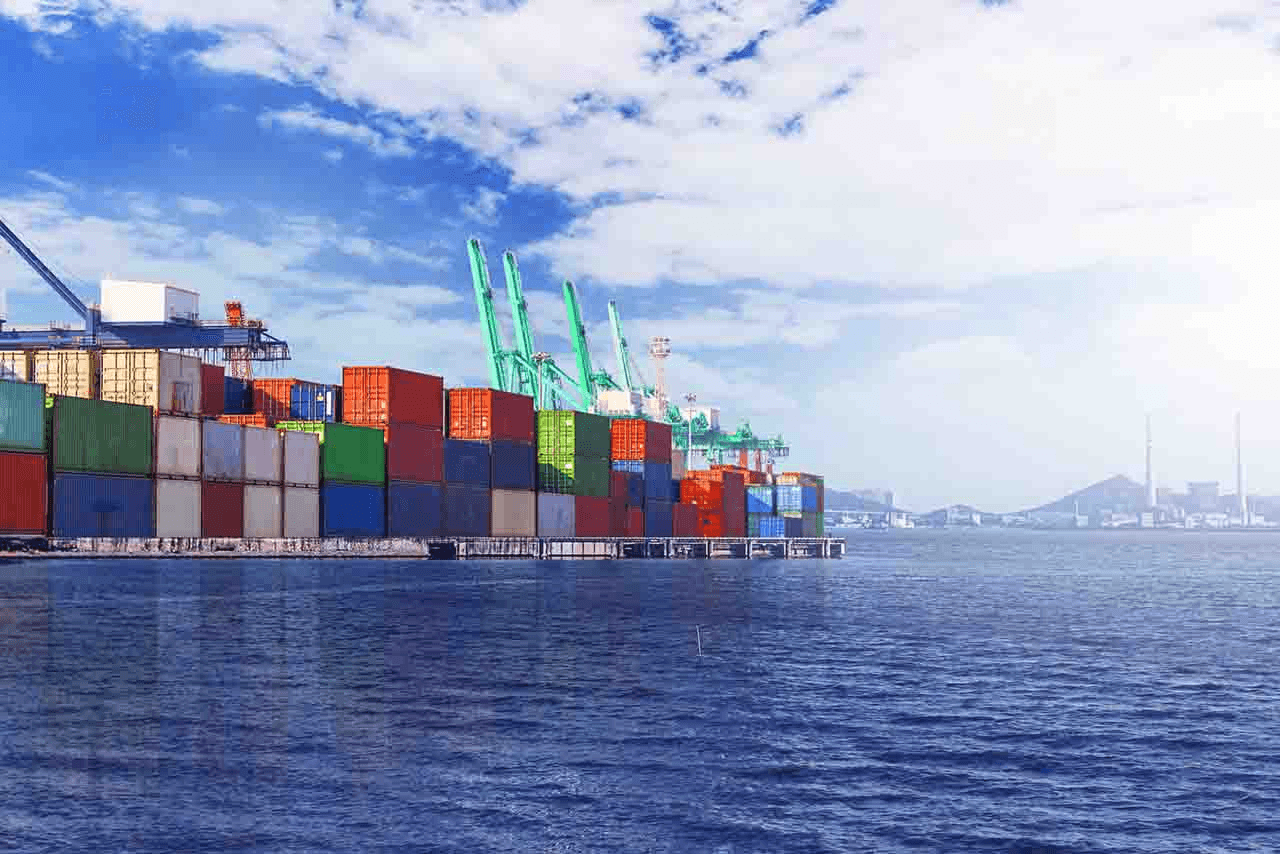
There are different types of transport in exports made by sea. Among integrated transport, Ro-Ro transport, tanker, container or bulk cargo transport, the most suitable one should be preferred according to the type of goods carried, departure and arrival points. Today, container shipping is frequently used in international trade as it makes it possible for heavy loads to be transported safely to different ports of the world.
The recent dynamism experienced in logistics due to the pandemic caused delays in the return of especially empty containers to ports. The inability to fill emptied containers immediately and the long waiting times of ships at ports brought along the empty container crisis in Far East, European, and American markets. Containers, which became even more valuable and highly demanded because they could not be found easily, caused freight prices to jump far above normal. We observe that exporters' usage rate of Navlungo has increased to find freight.
All these developments also prevented manufacturers from loading their goods on time and led to excess stock. In order not to be affected by the container crisis and its consequences, and to carry out your exports efficiently, we especially advise you to book your space on ships early. In addition, you can map different routes for your cargo by using alternative ports, thereby avoiding long waiting times at busy ports.
Another transportation method frequently preferred in maritime exports is Ro-Ro transport, which is carried out as a result of conducting a part of the transport done by road over the sea. As Ro-Ro ships do not wait for very long periods at ports and allow goods to be loaded and unloaded quickly, Ro-Ro transport has become a frequently preferred maritime transport method to save time.
Keep All Necessary Documents Ready
In order for maritime export operations to be carried out seamlessly and safely, it is important to obtain the necessary permissions and documents from official institutions. In addition, you should have the stages of maritime export handy in writing. In this way, you can go through both local and international logistics processes healthily. To examine the documents required in maritime transport, you can check our relevant content.
Ensure the Packaging is Robust in Less than Container Load (LCL) Shipments
In LCL, also known as groupage transport, which involves filling a specific part of a container, it is very important that the cargo is packed correctly and robustly. Especially if handling is carried out at transshipment ports, potential damage can only be prevented through the use of correct packaging. The cargo's resistance to humidity should also be communicated to the carrier, and its packaging should be carried out accordingly.
The long waiting times of products at ports after the pandemic made the proper stacking of transported products critical as well. It is necessary to secure packages inside the container, support those that cannot be secured to prevent movement, ensure that no gaps are left between packages, and be extra meticulous when stacking products of fragile nature. Since the type of stacking can change the freight fee, flawless stacking is also highly important in terms of cost.
Ensure Control of Cargo in Full Container Load (FCL) Shipments
In FCL or full container transport, where the entire container is loaded with the material of a single exporter, when the container is taken to the warehouse, its doors must be closed and thoroughly checked with a flashlight to see if there are any holes. Furthermore, door locks and the quality of external packaging must also be checked after loading. In order to prevent the material from being damaged or stolen in transit, the container must be sealed and other necessary precautions must be taken when leaving the warehouse.
Table of Contents
Suzan Celebi
All Posts